

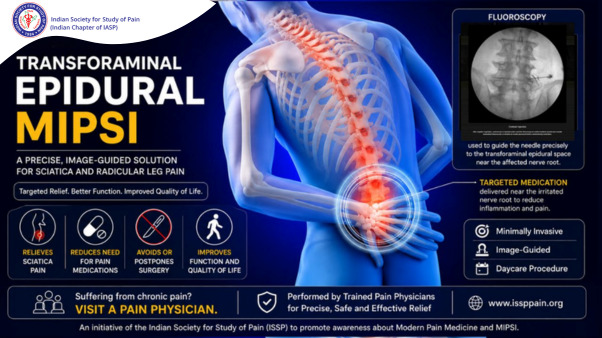
Sciatica can be debilitating. The sharp, shooting pain that travels from the lower back into the leg can interfere with walking, sitting, sleeping, and daily activities. While many patients improve with medications and physiotherapy, some continue to experience persistent pain that significantly affects their quality of life.
For such patients, a specialized image-guided procedure known as Transforaminal Epidural MIPSI may provide significant relief.
What is a Transforaminal Epidural MIPSI?
MIPSI stands for Minimally Invasive Pain and Spine Intervention.
The term has been introduced and promoted by the Indian Society for Study of Pain (ISSP) to better describe modern image-guided pain procedures. Rather than referring to these treatments as “pain injections” or “blocks,” the term MIPSI reflects their precision, scientific basis, and minimally invasive nature.
A Transforaminal Epidural MIPSI is an image-guided procedure in which medication is delivered precisely around an inflamed spinal nerve root through a natural opening in the spine called the neural foramen.
The goal is to reduce inflammation, relieve nerve irritation, and improve function without surgery.
Who May Benefit from Transforaminal Epidural MIPSI?
This procedure is commonly recommended for patients suffering from:
- Lumbar Disc Prolapse (Slipped Disc)
- Sciatica
- Radicular Leg Pain
- Persistent symptoms despite medications and physiotherapy
Patients often describe symptoms such as:
- Pain radiating from the lower back to the buttock and leg
- Burning or electric shock-like pain
- Tingling or numbness in the leg
- Difficulty walking due to pain
- Pain aggravated by sitting, bending, or coughing
When conservative treatment fails to provide adequate relief, Transforaminal Epidural MIPSI may be considered as part of a comprehensive pain management plan.
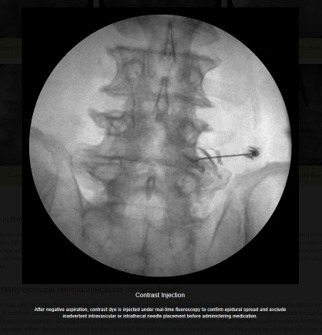
A Fluoroscopy Guided Image, while performing The Transforaminal Epidural MIPSI
How Does the Procedure Work?
When a spinal disc bulges or herniates, it can irritate nearby nerve roots. Inflammation around the nerve often contributes significantly to pain.
During a Transforaminal Epidural MIPSI:
- The patient lies comfortably on a procedure table.
- The procedure is performed under fluoroscopy (C-arm X-ray guidance).
- Local anesthesia is used to improve comfort.
- A specialized needle is guided precisely near the affected nerve root.
- Anti-inflammatory medication and local anesthetic are delivered around the inflamed nerve.
Because the medication reaches the target area directly, relief may be achieved with a smaller amount of medication than would be required through oral treatment.
Why Precision Matters
Not all epidural procedures are the same.
The transforaminal approach allows the Pain Physician to deliver medication closer to the irritated nerve root, making it particularly useful for patients with unilateral leg pain caused by lumbar disc prolapse.
Image guidance enhances accuracy and helps ensure the medication reaches the intended target.
Benefits of Transforaminal Epidural MIPSI
Many patients experience meaningful improvements after the procedure.
Potential benefits include:
Reduction in Leg Pain
By reducing nerve inflammation, patients often notice significant improvement in sciatica symptoms.
Reduced Dependence on Medications
As pain improves, some patients may require fewer pain medications under medical supervision.
Improved Participation in Rehabilitation
Pain relief often enables patients to engage more effectively in physiotherapy and exercise programs.
Potential to Avoid or Postpone Surgery
For selected patients, symptom relief may help delay or avoid the need for surgical intervention.
Is Transforaminal Epidural MIPSI a Surgery?
No.
Transforaminal Epidural MIPSI is a minimally invasive procedure, not a surgical operation.
There are no large incisions, no implants, and no prolonged hospital stay. Most patients return home on the same day after observation.
What Results Can Patients Expect?
Every patient is unique, and outcomes depend on factors such as:
- Underlying diagnosis
- Severity of nerve compression
- Duration of symptoms
- Overall health condition
- Adherence to rehabilitation recommendations
However, most patients experience significant relief following the procedure.
It is important to understand that Transforaminal Epidural MIPSI is not intended to be a standalone treatment. The best results are usually achieved when it is combined with:
- Physiotherapy
- Exercise programs
- Posture correction
- Weight management
- Lifestyle modifications
The ultimate goal is not simply pain reduction but restoration of function and quality of life.
Frequently Asked Questions
Is the procedure painful?
Most patients tolerate the procedure well. Local anesthesia is used to improve comfort, and the procedure is typically completed within a short duration.
Will I need hospital admission?
In most cases, no. Transforaminal Epidural MIPSI is usually performed as a daycare procedure, allowing patients to return home the same day.
Are steroids harmful?
The medications used during the procedure are carefully selected by the treating Pain Physician. When used appropriately in suitable patients, corticosteroids can be highly effective in reducing inflammation and relieving pain.
Will the pain come back?
Pain relief varies among individuals. Some patients experience long-lasting improvement, while others may require additional treatment depending on the underlying condition and lifestyle factors.
How soon can I return to normal activities?
Many patients resume routine activities within a short period, although specific instructions may vary depending on individual circumstances.
Why ISSP Promotes the Term MIPSI
Pain Medicine has evolved significantly over the past few decades.
Modern image-guided interventions are not simply “injections.” They are precise, evidence-based procedures performed by trained Pain Physicians using advanced imaging technology.
The term Minimally Invasive Pain and Spine Intervention (MIPSI) better reflects this modern approach and helps improve awareness about contemporary pain management options.
Through educational initiatives and awareness campaigns, ISSP continues to promote the use of accurate terminology that reflects the science and precision of Pain Medicine.
When Should You Consult Pain Physician?
If you are experiencing:
- Persistent sciatica
- Radiating leg pain
- Lumbar disc prolapse-related symptoms
- Inadequate relief from medications and physiotherapy
a consultation with a Pain Physician may help determine whether Transforaminal Epidural MIPSI is appropriate for your condition.
Final Thoughts
Living with sciatica can be physically and emotionally exhausting. Fortunately, advances in Pain Medicine have created effective non-surgical treatment options for many patients.
Transforaminal Epidural MIPSI represents a precise, minimally invasive approach that targets the source of nerve irritation, helping patients reduce pain, improve function, and return to their daily lives.
When performed by trained Pain Physicians under image guidance, it can play an important role in a comprehensive treatment strategy for lumbar disc prolapse and radicular pain.
ISSP Awareness Message
Suffering from chronic pain? Visit a Pain Physician.
An initiative of the Indian Society for Study of Pain (ISSP).
To learn more about Pain Medicine and locate qualified Pain Physicians, visit the official ISSP website.

About the Author
Dr. Debjyoti Dutta is a leading Pain Physician, educator in Pain Medicine. He serves as the Vice President of the Indian Society for Study of Pain (ISSP). With extensive experience in image-guided pain interventions and chronic pain management, he is actively involved in pain education, physician training, and promoting awareness about modern Pain Medicine across India.